Showing posts with label Homeschool. Show all posts

20 January 2015

More Books

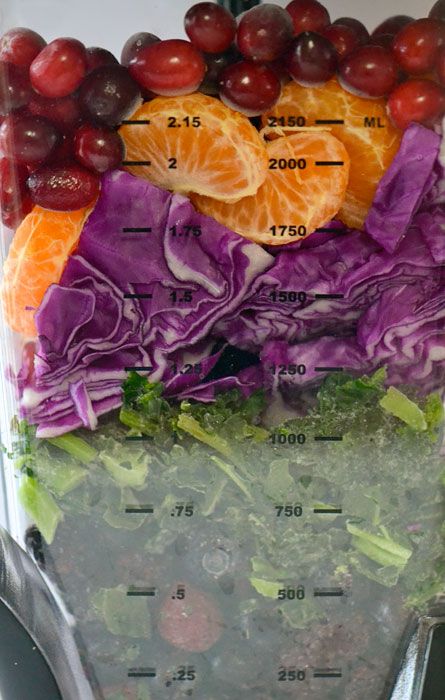
But first a shot of my birthday present, a fancy Ninja blender.
Purple cabbage in a smoothie is actually really good. If there are enough berries, you can't taste the cabbage. And finally I found something to do with the cranberries I somehow over-purchased at Thanksgiving. Costco sells giant bags of frozen spinach and kale, so I tossed some of it in on top of the bottom layer of frozen raspberries, blueberries and blackberries. Someday maybe a Vitamix, but for now we're having fun coming up with combinations. So much better than making smoothies in the food processor. Knocking down those suggested daily servings of fruits and vegetables while hardly even trying. Until R gets tired of smoothies, which I'm sure will happen soon.
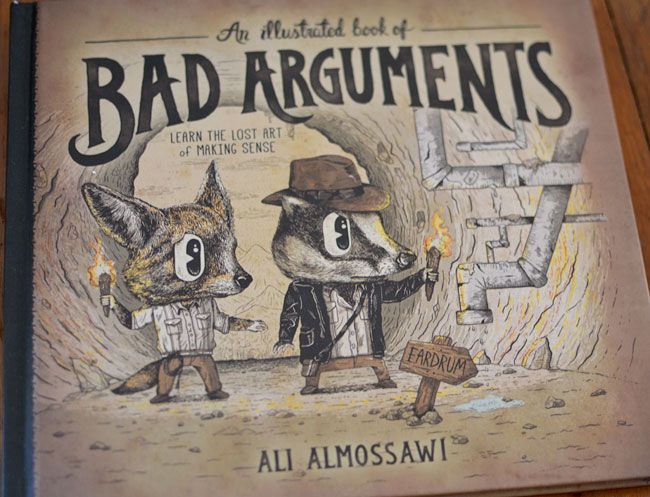
I wanted to keep a record of some of R's favorite books right now. This one was from Santa this year. It's one of the most entertaining books I've ever read.
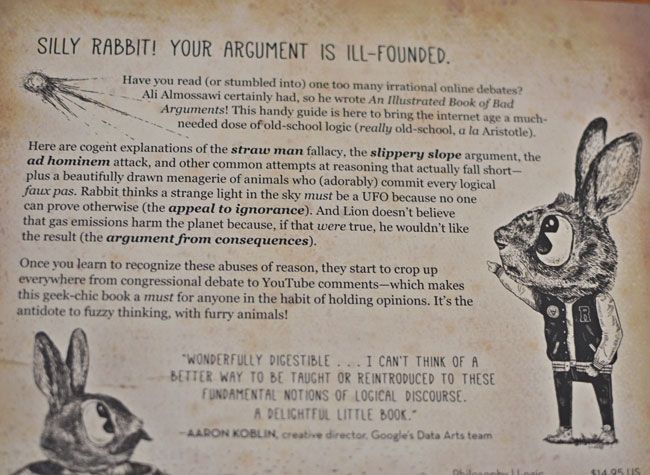
"The antidote to fuzzy thinking!"
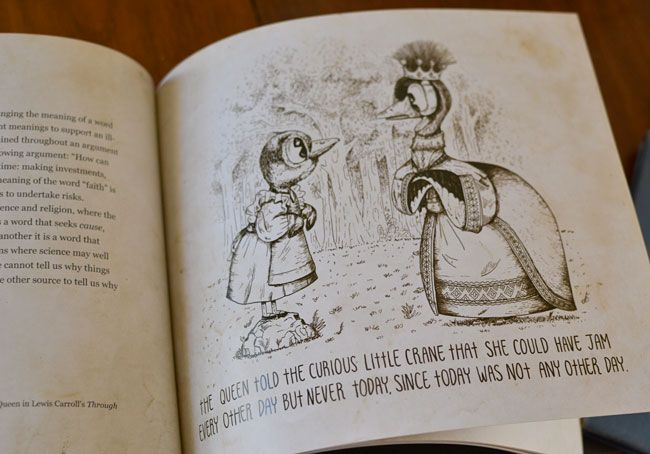
It's such a funny, imaginative treatment of a dry subject. My favorite part of studying logic was always the examples of bad arguments.
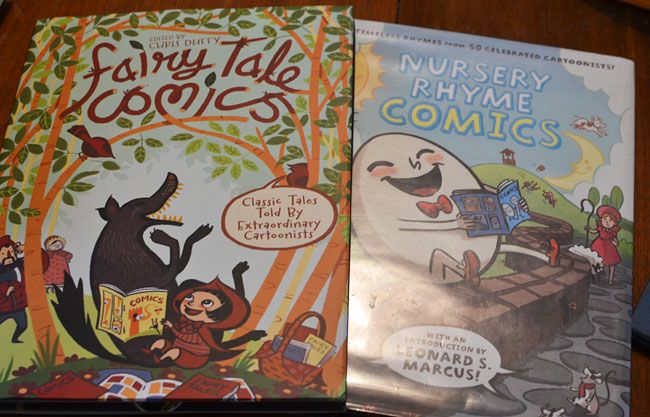
These are far and away her favorite books right now.
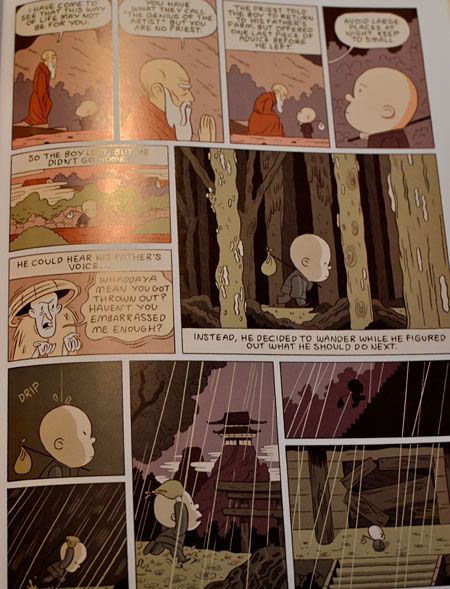
Beautifully drawn cartoon of the Japanese folk tale, "The Boy Who Drew Cats." We are big fans of the animated version narrated by William Hurt. We checked out several versions of the tale from the library, to compare illustration styles.
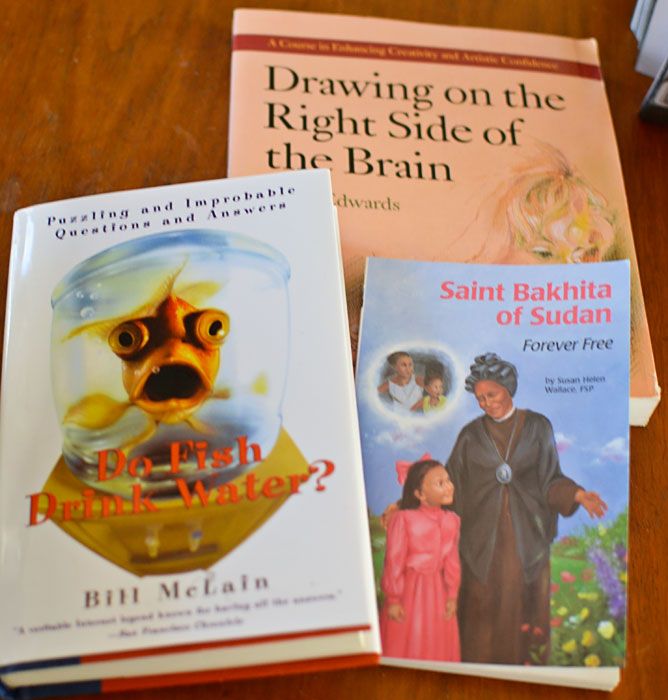
Three books that happened to be on the dining room table. A friend gave me Drawing on the Right Side of the Brain in high school, and we're starting lessons from it. I wish I knew what happened to my original copy. I found this one at the thrift store.
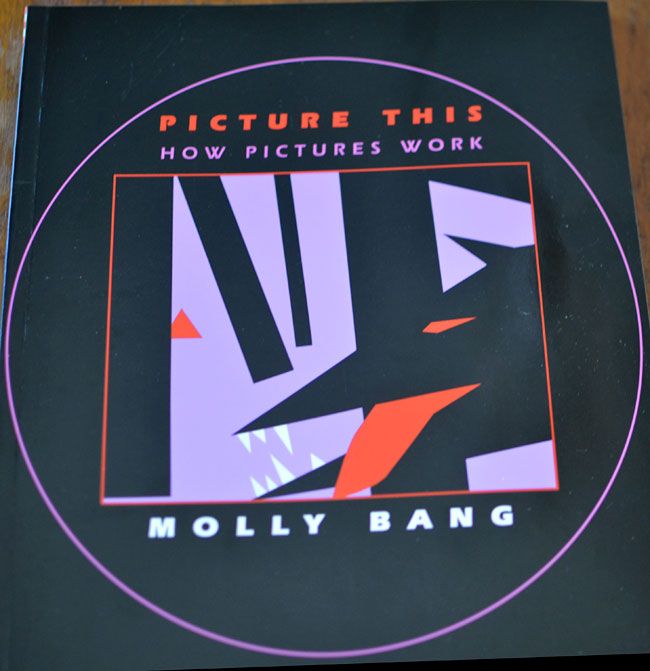
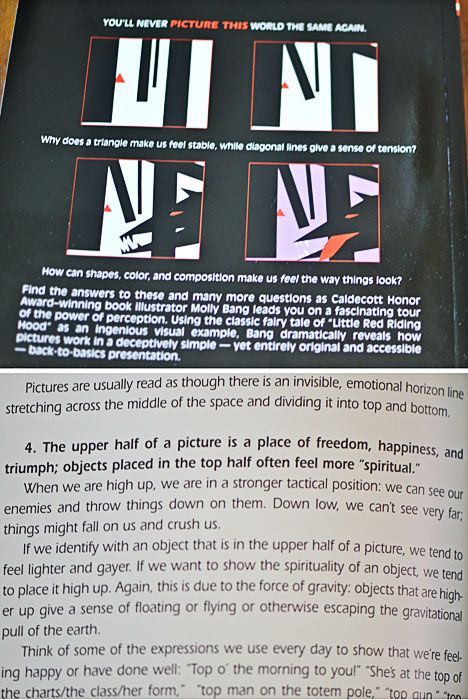
This is a fantastic book to teach shape, color and composition. How powerful lines are, the emotions they evoke.
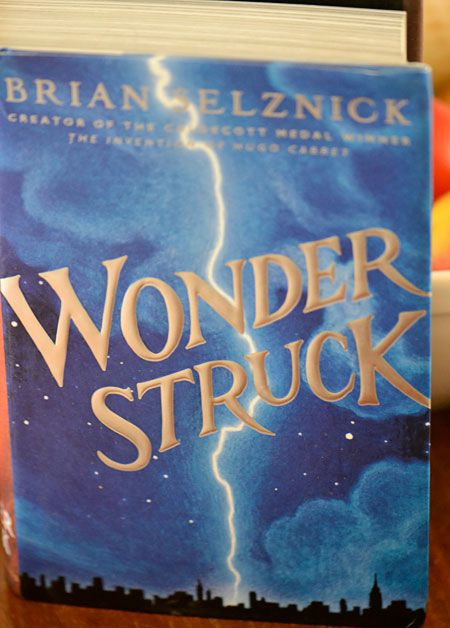
And finally, another book to immerse yourself in, by the author of The Invention of Hugo Cabret, Brian Selznick. Wonderstruck.
From the website: "A boy named Ben longs for the father he has never known. A girl named Rose dreams of a mysterious actress whose life she chronicles in a scrapbook. When Ben discovers a puzzling clue in his mother's room, and Rose reads an enticing headline in the newspaper, both children set out alone on desperate quests to find what they are missing.

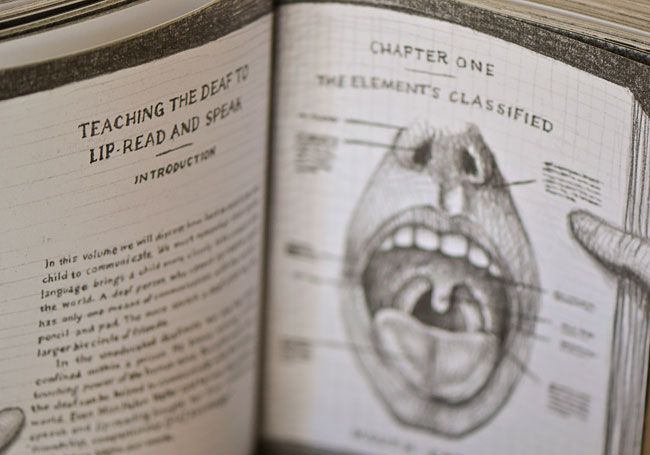
Ben's story, set in 1977, is told entirely with words, while Rose's story, set fifty years earlier, is told entirely with pictures. The two stories weave back and forth before ultimately coming together. Rich, complex, affecting, and beautiful–with over 460 pages of original artwork–Wonderstruck is a stunning achievement from a uniquely gifted artist and visionary."

15 January 2015

The Power of Free Voluntary Reading

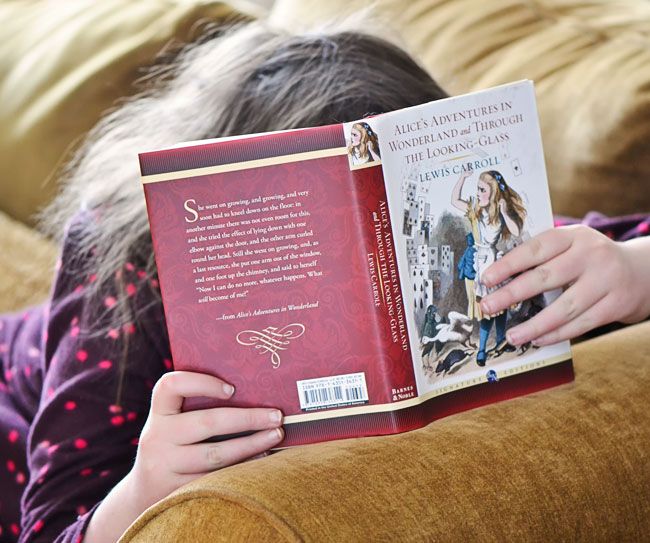
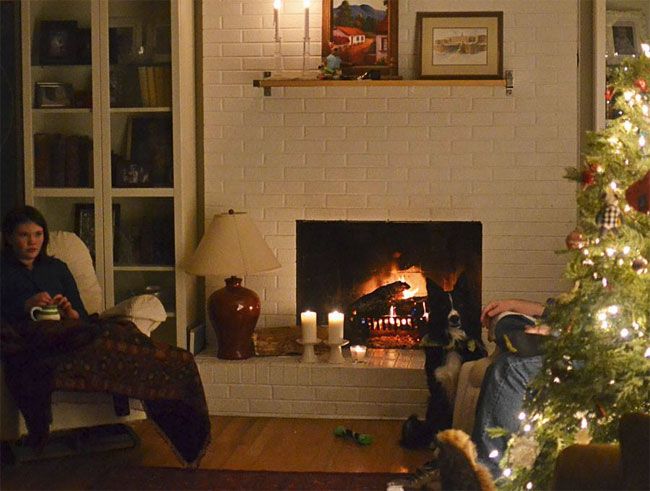
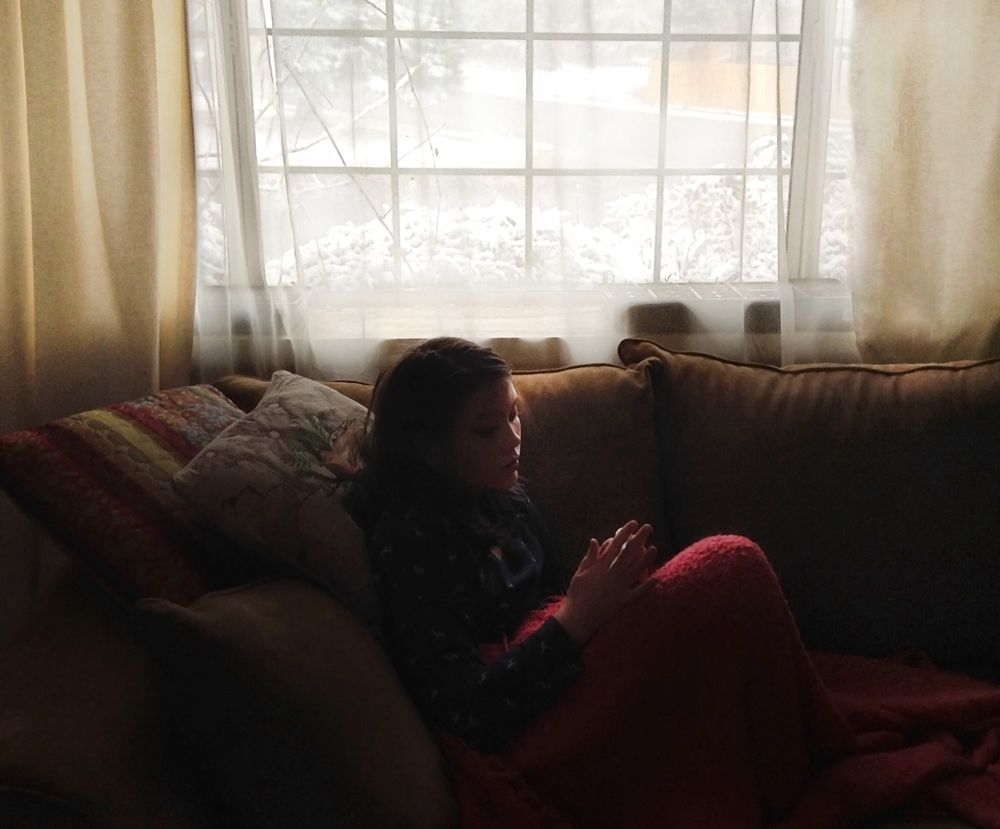
Bedhead, pj's, a comfortable couch and a good book.
Homeschooling frees up more time for reading. Hours spent immersed in a book that you chose yourself, that you're reading purely for pleasure. No book report or quiz at the end. Reading, and enjoying reading, is the end in itself. A reader picks up grammar and vocabulary without knowing it. A child who reads a lot learns to structure sentences, and take pleasure in the rhythm of language.

Recently I started reading Stephen Krashen and watching his presentations. This site links to great resources about the benefits of free voluntary reading, from Dr. Krashen and others. There are studies that prove that reading for pleasure physically changes your brain, and makes it grow (increased cortical thickness). Common sense observation shows that free reading improves general knowledge, vocabulary, independence, language competence, writing, and motivation to learn. The research backs up and confirms common sense conclusions.
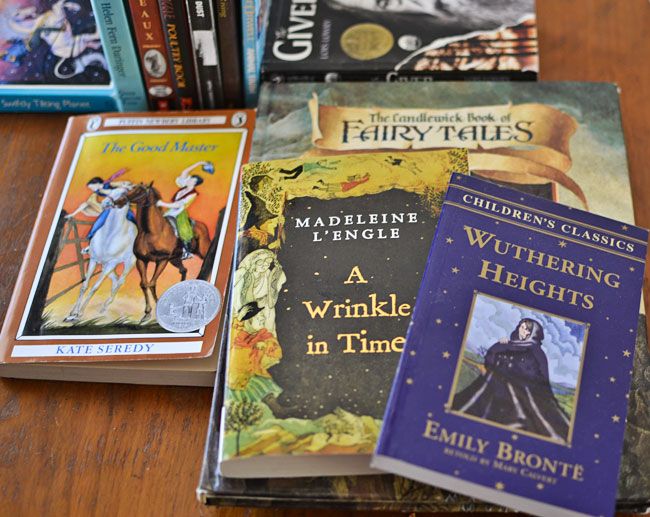
We have books stashed everywhere, and cozy corners that are good for reading. 
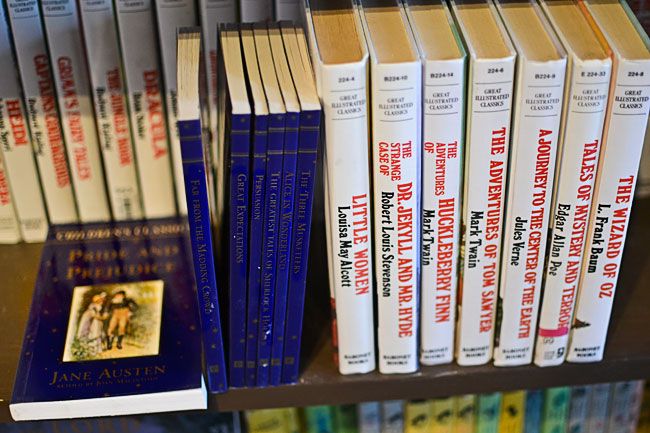
A whole row of Great Illustrated Classics. R got involved in the process of collecting them, hunting at thrift stores and looking online for used ones. This September she finished reading all of the 50+ ones we own. 
At age 11, she can read lots of classics in their unabridged versions. But the feeling of accomplishment, of collecting these books, setting a goal to read all of them and then reaching that goal, was a great motivator. I hope our house has a culture of books, an environment where they are valued and appreciated, and always available. We try to protect free time, so R has the time to choose books and to read as much as she wants.
We like to make a special event of listening to audio books together. Dickens is the best, especially with a good, expressive reader.

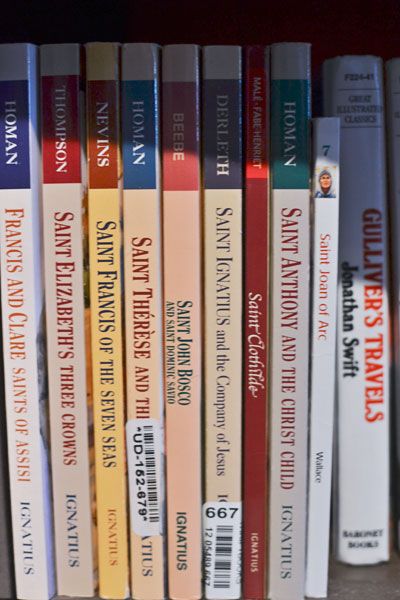
We're starting a collection of the lives of the saints. She has several saints' anthologies too. 
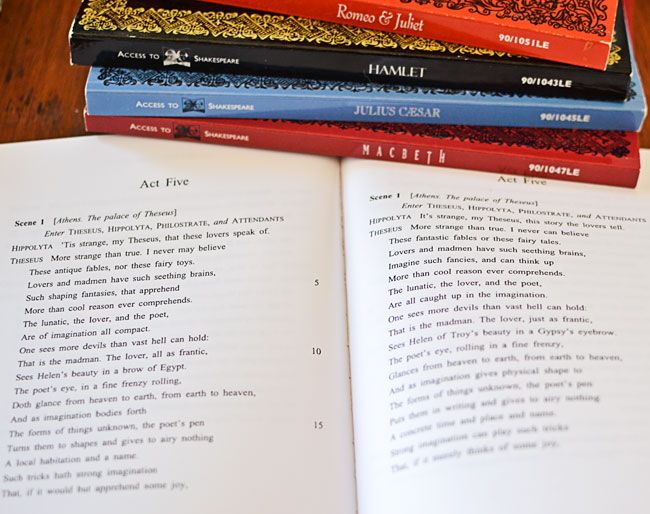
A treasured Christmas gift from my Dad this year. The Access to Shakespeare editions with facing-page translations in contemporary English. 
"A great book should leave you with many experiences, and slightly exhausted at the end.You live several lives while reading." --William Styron.
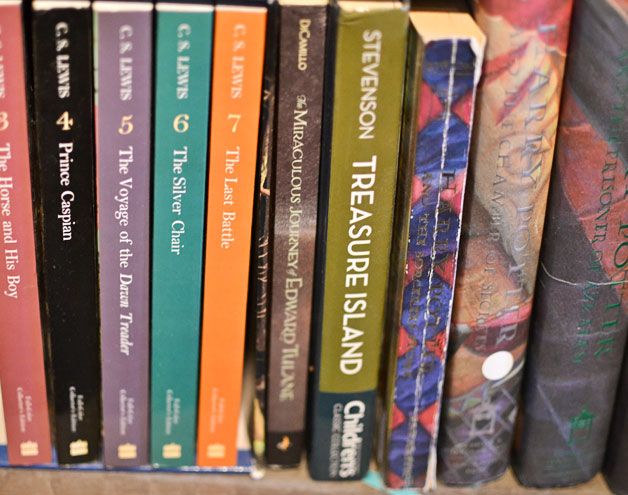
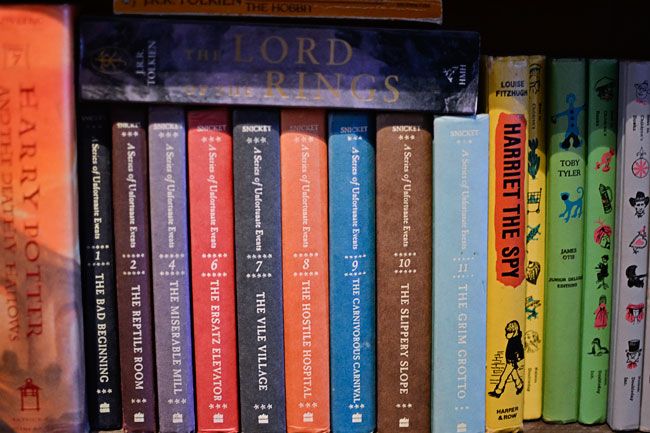
This is a great shelf. Narnia, Lemony Snickett, Harry Potter, and Tolkien's books. My old copy of my favorite book as a kid, Harriet the Spy

I love this quote from Paul Auster: "Reading was my escape and my comfort, my consolation, my stimulant of choice: reading for the pure pleasure of it, for the beautiful stillness that surrounds you when you hear an author's words reverberating in your head." I think it's a mistake for schools to fill students' days with "reading skills" instruction, vocabulary quizzes, and assigned books with a dreaded report as the reward for finishing. The free time so necessary for voluntary reading is eaten up by schools assigning hours of homework a night, and by parents overscheduling extracurriculars and lessons. The books we pick up for "pure pleasure," with the anticipation of escaping and going somewhere else for awhile, are where we learn to be literate. "To acquire the habit of reading is to construct for yourself a refuge from almost all the miseries of life."  --- W. Somerset Maugham.


12 March 2014

Homeschool Sick Day

102 fever for two days, poor kid. This is one of the great perks of homeschooling. Snow keeps coming down outside, I don't have to drive anywhere, no worries about missing schoolwork and having hours of make-up homework when she goes back. She's been reading a lot and even did some math online. But mostly sleeping and listening to me read Emma to her.


05 February 2014

Deep Freeze

It finally got up to 0 degrees at 2:00 today, after a low of -19 last night. The sun is out but everything feels suspended. 
The cold frame in the garden is crusted over with ice. In a few months it will be closed, with green seedlings sprouting under the glass.
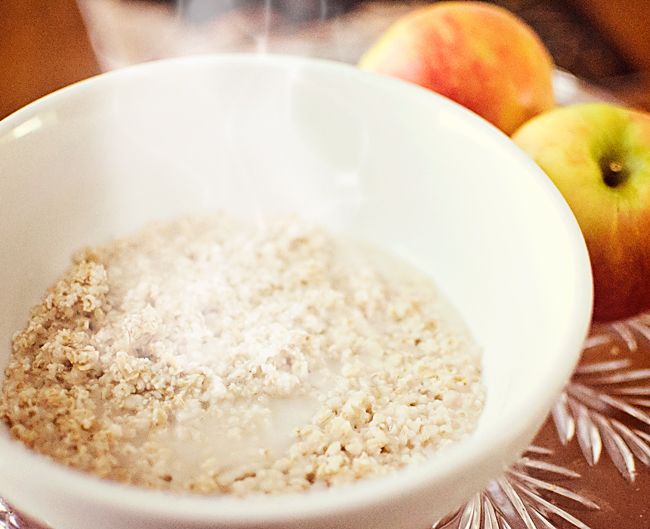
The chickens got an extra treat of hot oatmeal with their apples this morning. It's messy but they love it. I checked for frostbitten combs and feet, but they all seem to be fine.
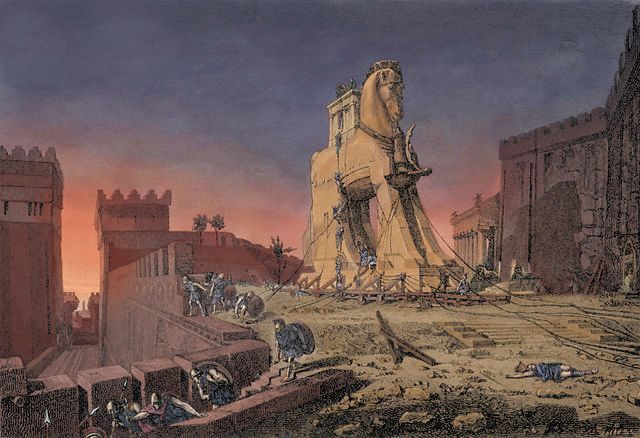
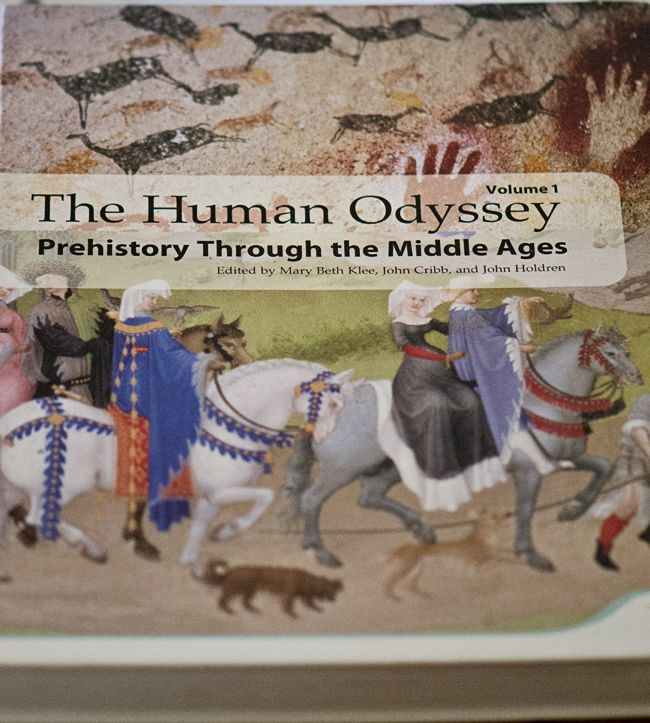
Inside we are listening to the furnace crank on over and over, while the wind blows smoky snow past the windows. Our house is so bright and white inside when the sun reflects off the snow that our eyes get tired after awhile. We are working away at Greek history. R surprised me by showing me this picture from her history textbook (The Human Odyssey), and asking if this is the same painting we saw at the Art Museum last week. She's right! It's "Le Cheval de Troie (The Trojan horse)" (1874) by Henri-Paul Le Motte. I love when she puts ideas together across subjects like that.

We looked at some other artists' conceptions of the Trojan horse, some that looked like a realistic horse and some, like this amazing painted still from the 2004 movie Troy,  that looked like they had been nailed together with ships' timbers. Or the "planks of fir" from Virgil's Aeneid. 
After many years have slipped by, the leaders of the Greeks,
opposed by the Fates, and damaged by the war,
build a horse of mountainous size, through Pallas’s divine art,
and weave planks of fir over its ribs:
they pretend it’s a votive offering: this rumour spreads.
They secretly hide a picked body of men, chosen by lot,
there, in the dark body, filling the belly and the huge
cavernous insides with armed warriors.
- (Virgil's Aeneid, Book II)

29 January 2014

Passport to Paris at the Denver Art Museum

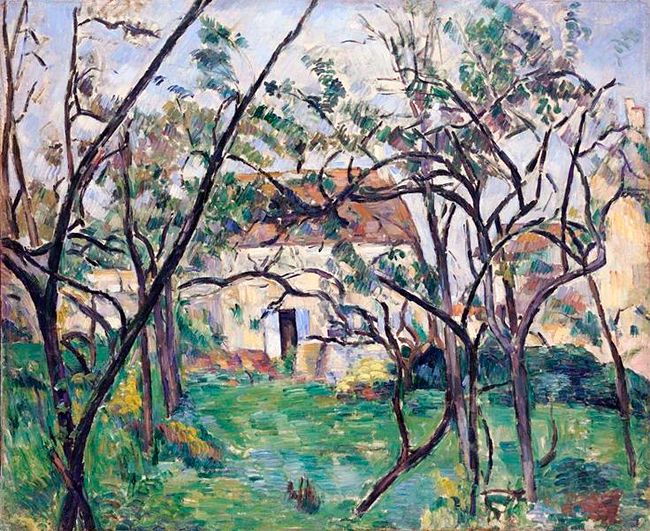
D had the day off yesterday, and we took off to see the Denver Art Museum's Passport to Paris Exhibit. R spent a long time looking at this Cezanne painting, House in the Country. She liked being able to get up close and examine the short rough parallel brushstrokes. We talked about how the branches gave it a kind of wild energy, with the house more serene and recessed in the background.
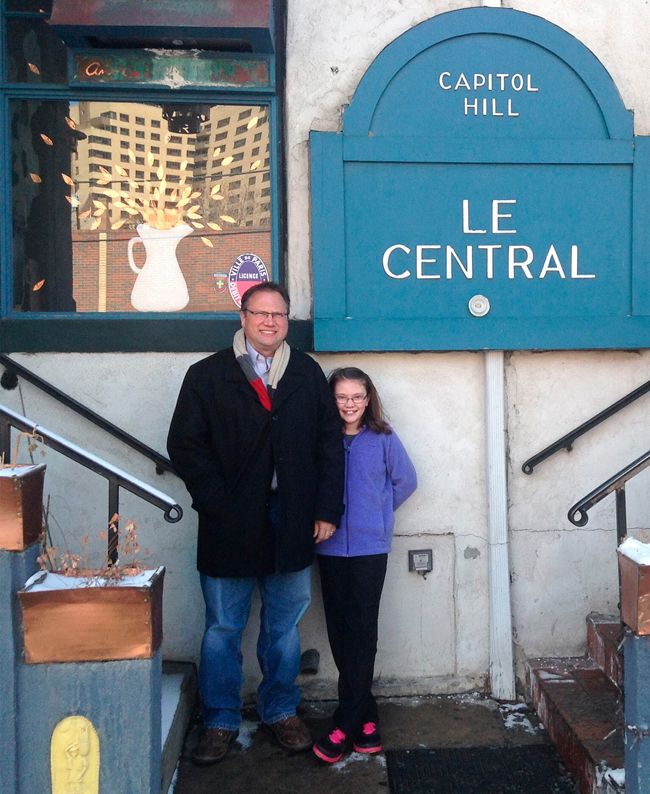
We decided to make a special-occasion day of it, and start with a French meal at Le Central. I had moules frites au pistou. R didn't like the mussels, but she loved dipping her bread in the hot garlicky wine broth. Le Central has been around for 33 years, and the menu is authentic and affordable French country cooking.
We had our wedding rehearsal dinner here, on the beautiful back patio with lights twinkling and friends and family from across the country together in one room. I love this picture 11+ years later. The chef has brochures that talk about his background, hometown of Toulon and the style of cooking there. I made myself hold back and not push the "this is educational!" enthusiasm on R, and she ended up reading it and asking about Provence and Toulon and wanting to make some of the recipes. 
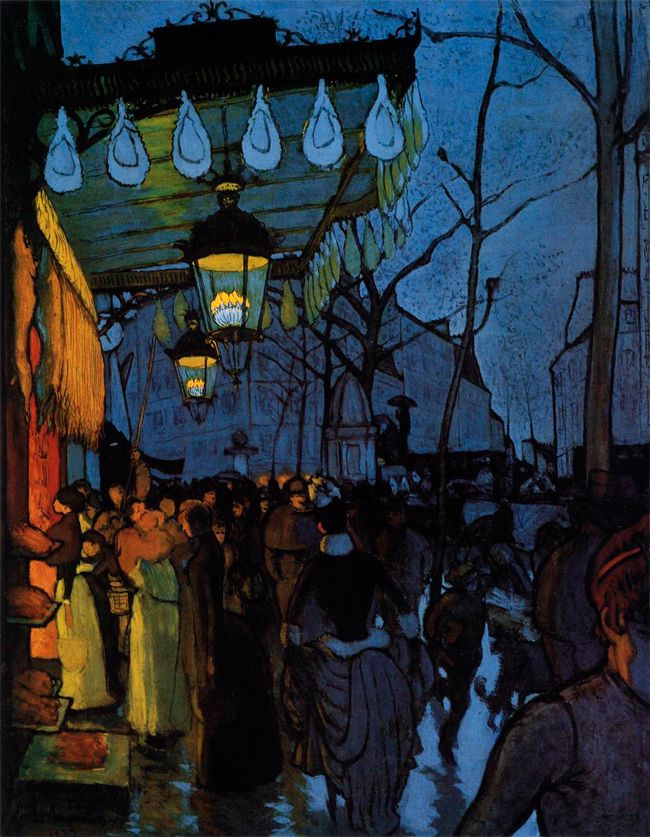
The "Passport to Paris"exhibit featured Impressionist paintings on loan from other collections, and it was pretty spectacular. The first rooms were earlier works that placed them in the context of Louis XIV and life at Versailles, and revealed how changes in art and society mirrored each other. R liked the antiques, particularly the 18th century sedan chair and the description of aristocrats carried in them because the streets flowed with mud and raw sewage. She asked for a print of the painting above, Louis Anquetin's 'Avenue de Clichy,' so she could take it home and hang it next to her bed and pretend at night that she's walking down a nighttime street in Paris.

R said her favorite piece of the day was this endearing little menu drawn by Paul Gaugin in 1900, in watercolor and conté crayon, illustrating the La Fontaine fable of the fox and the crow. It was in the Drawing Room collection of French drawings, framed next to another Gauguin menu featuring a Breton and Tahitian woman talking having a conversation.

Before Christmas we had watched the lively and entertaining BBC series, The Impressionists: Painting and Revolution, with art writer Waldemar Januszczak. It was a revelation as he blew the dust off some of the clichés that trap impressionists on candy boxes and umbrellas and silk scarves. One of the saddest stories in the documentary was Gaugin's love for his children, and heartbreak when his wife left him and took them away because he failed to live up to her family's idea of a respectable middle class provider. That made this little menu all the more touching, since it was painted after Gaugin had traveled alone to Tahiti. It gives a glimpse into his relaxed humor with friends. From the museum's website, "The menu planned for the evening’s dinner appears in a whimsical combination of French and Tahitian. It began with aperitifs and “foutimaises assorties,” a made-up word derived from the word “foutaises,” meaning something silly."
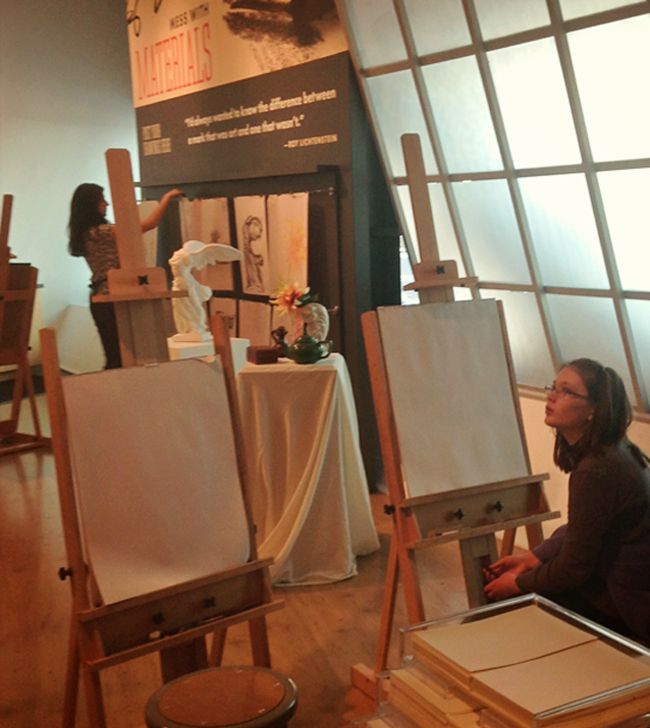
We ended our day with a visit to the Art Studio on the first floor, that was set up with various stations to practice methods of drawing. Still life tableaux, poseable anatomical models of people and animals, easels, paper and every kind of medium from crayons to charcoal to sumi ink. Videos of working artists were playing, and you could pick up a book about drawing and sit down at one of the tables to study it. There was a station for scribble drawing, and one for making your own drawing machine.
This wall-size drawing machine used pens that could be tied at different lengths to trace arcs and circles. The Paul Klee quote says, "A drawing is simply a line going for a walk."
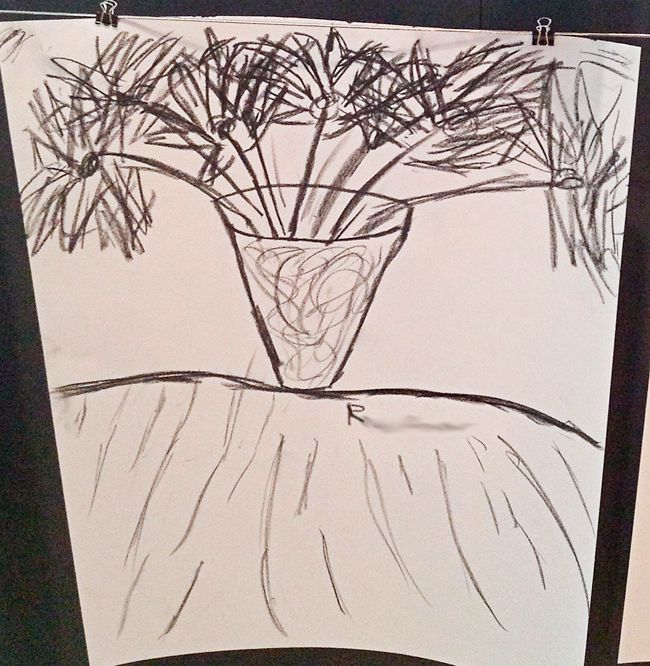
R's finished charcoal still life.
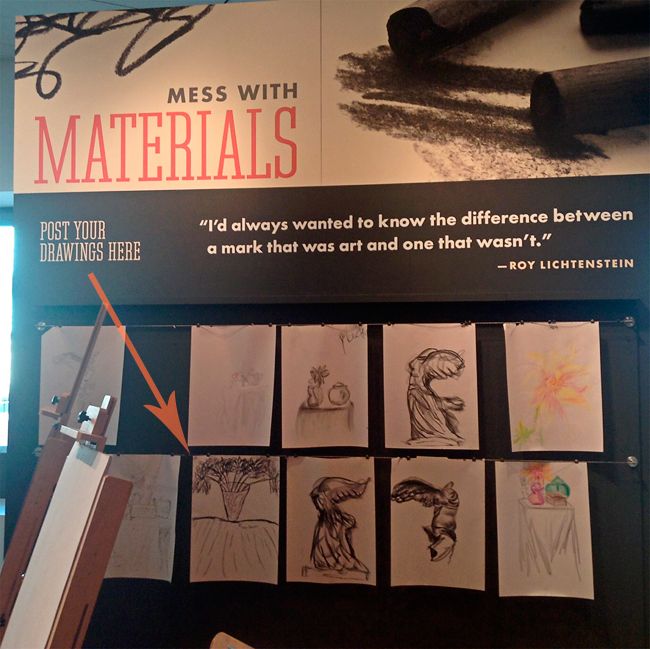
She pinned it to the art wall when we left.

We love the art museum, and this is one of the best days we've ever had there. Being able to visit in the middle of the day on a Tuesday is one of the best things about our homeschooling schedule.


27 January 2014

History Curriculum

Before I go into what we're working on for history this year, I'd like to clarify my earlier post. It's important to me to be fair to her school when I talk about our reasons for leaving it. The school did a lot of things right. The staff is dedicated to teaching and instilling faith in their students. R had some great years there with passionate teachers, but also some discouraging ones, with teachers who seemed to be just putting in their time. We have five years of good memories and are grateful for what she learned there. By all accounts that school works well for a lot of kids. We also knew many families who transferred their kids out for various reasons, some that paralleled ours.

One of the first subject areas I researched this summer was history/social studies. I felt a "could this really be true?" excitement when I saw how much we could cover with one-on-one instruction. I went to a Great Books college for undergrad, and I liked the idea of a classical curriculum. I looked at some curricula that we could just unbox and start teaching, and while they were tempting because I am so new and inexperienced in all this, we ended up putting together our own approach and sources. The Well Trained Mind forums were the most helpful source I found for researching and getting feedback from homeschooling parents. (Susan Wise Bauer's book The Well Trained Mind: A Guide to Classical Education at Home has been the best jumping-off point for us. It's an invaluable book.) 

We decided to use K12's  The Human Odyssey Volume 1: Prehistory Through the Middle Ages as our main text. K12 is a full curriculum, but we wanted to use only this book. I found this, and most of our books, used on Amazon or eBay.
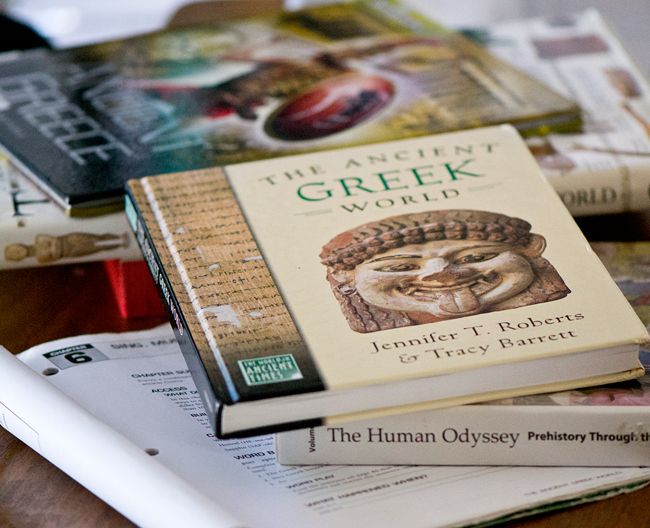
Again based on recommendations from the Well Trained Mind forums, we supplement the textbook with individual volumes from The World in Ancient Times series from Oxford University Press.
So far we use these Oxford Press books the most. They have turned out to be perfect, at just the right reading level to be challenging without being so difficult that R gets discouraged. We use the workbooks and study guides from the Oxford Press series for some volumes. 

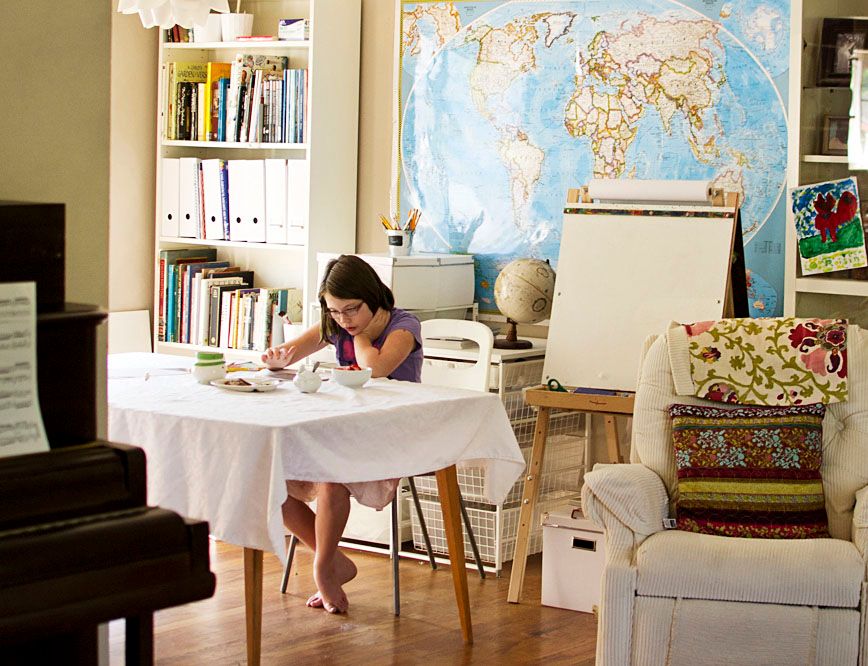
What we are both loving about homeschool is that we can take our time exploring all kinds of additional sources. My dad is a retired history professor and my mom a retired English teacher, and we have inherited some wonderful books from their library. Others come from our local library, or from thrift stores, library book sales, garage sales or online sources for used books.
We watch a lot of documentaries on Netflix and Amazon Prime, and check others out from the library. We also use our desktop computer and the iPad for interactive presentations, to research new words and questions that come up, and to go more deeply into ideas that R likes. She was interested in the pharaohs' journeys through the underworld, so we watched a National Geographic "Egyptian Secrets of the Afterlife" documentary. It dramatized the afterlife journey of Seti I guided by the Book of Gates, and made the history come alive for her.

I feel nervous all the time, that we are missing important lessons or going too deeply but not broadly enough. When she goes back to school, it will be with students who have been preparing to do well on tests that cover specific material. Whether or not we agree with that, it's the academic world she will have to function in for many years to come, and I wonder if it's a mistake to lead her away from that approach. When we first started, I was surprised to see that R's skills are mostly limited to completing worksheets. She wants to choose from multiple choice bubbles, and gets impatient when I ask her to think critically. "What's the answer? Just tell me the answer you're looking for." That seems so fundamentally wrong to me, that I'm willing to take a risk to try to turn that tide. How will we feel if it turns out she's not testing as highly, because she's learning differently for right now?

D and I agree that we're taking the long view, and we have to be brave about it. In many ways, it's been like watching her brain wake up, and recapture the curiosity and confidence of her early childhood. She will read a textbook in after school hours because she's interested in, say, Mesopotamian cuneiform script. She wants to use it as a guide to make up her own symbol language to exchange notes with her friend E. Is she missing out because she's doing that instead of homework that covers more ground more shallowly, where her knowledge will be measured by a chapter test? 

The fortunate thing about starting this in 2014 is the internet resources that are available now, and the guidance and encouragement from other parents who have been down this road. 


23 January 2014

Bright New Chapter

First day of homeschool, August 2013


I've let this blog languish, in part because I started to feel conflicted about my family's privacy. Even though I've been careful not to publish names or identifying details and nothing embarrassing or private, as my daughter gets older I'm more aware that her pictures and the details of her life are not necessarily mine to share. I started the blog when R was five and we had just moved into this house. She's ten now, and it has been a wonderful record of these years. I miss it. I've decided to start posting again, to track the new adventure we've embarked on. We're homeschooling this year for the first time. The blog name, Bright Refuge, seems apt for this new part of our lives. We're opening the windows to new landscapes and prospects, with a solid home base underneath us. Most importantly, I have my husband and daughter's permission to share these photos and details. 

As we came to the end of fourth grade last year in the Catholic school where R has gone since kindergarten, I couldn't shake a discouraged, dissatisfied feeling. It seemed like we were always settling. It wasn't good enough, and she wasn't happy, but the alternatives seemed out of the question. This is our parish, and our faith is at the center of our lives. We bought our house because it was easy driving distance to school and church. We had put in a lot of years (and volunteer hours!) in this school, and we loved our school friends.

But the messages kept coming to me at odd moments. Aren't you ashamed to be only half-invested in life like this? Why are you trying to convince yourself that this is as good as it's going to get? Why are you calmly accepting that your sunny, curious little child spends most of her day bored and sullen and resentful? And worse. Miserable and resigned to being bullied. Feeling invisible; given only cursory attention from teachers who were grateful that she made their lives easier by being a quiet, well-behaved good student. 

She worked for weeks on a book report and took great care with her character descriptions, and when she read it aloud to the class they mocked her for doing more work than she needed to. The teacher said sarcastically, "Wow R, you really outdid yourself," and she came home crying and ashamed. None of it was outrageously evil or damaging. I liked the teacher personally, and the kids were good kids for the most part. But that incident stuck with me as a dull heartache. A growing conviction that she deserved better than she was getting, and it was my fault.

I'm in my third of four years at the Denver Catholic Biblical School. This year, we're studying the Old Testament Prophets. Our summer reading assignment was Eugene Peterson's brilliant book about the prophet Jeremiah: Run With the Horses: The Quest for Life At Its Best. It made me ashamed of my passivity. What happened to my courage? In Jeremiah 12:5, God says to the prophet, "If you have raced with men on foot and they have worn you out, how can you compete with horses? If you stumble in safe country, how will you manage in the thickets by the Jordan?"

What kind of a life was this school preparing R for, in these critical years?

The messages kept coming. That July on World Youth Day, our new Pope Francis challenged his young listeners: "I ask you, instead, to be revolutionaries, to swim against the tide; yes, I am asking you to rebel against this culture that sees everything as temporary and that ultimately believes that you are incapable of responsibility, that you are incapable of true love." I almost always choose what's easy. I will go very far out of my way to avoid confronting people, or changing something that's comfortable. I'm good at coming up with reasons why the prevailing tides are just fine, and thank you but I'll just continue to float here in the warm salt water. And even if I know in my heart that the tide is moving in the wrong direction, what do you expect me to do about it?

One night I woke up thinking about homeschooling. How did that work, anyway? I knew I could never do it, but curiosity kept me from falling back asleep. I went downstairs to the computer, and the first thing that came up on a Google search was this quote from my Confirmation saint, St. Catherine of Siena: "Be who God meant you to be and you will set the world on fire.” That described nothing about R's education. Or me, as her mother whose job it is to make sure she gets what she needs to accomplish that.

We had registered for the next school year and paid our hefty non-refundable tuition deposit. R had an inspirational science teacher in fourth grade who was slated to teach science and social studies in fifth, and we had resigned ourselves to letting her at least finish out fifth grade at this school before transferring. She loved that teacher, and at least those two subjects would be rigorous and enjoyable for her. Then at the last day of school Mass, the principal announced that that excellent teacher was leaving. I sat in the car after Mass and cried. Should we start in June, looking around for other schools for August enrollment? How could we make a responsible decision in that amount of time, without seeing other schools in session? How could we introduce that kind of upheaval in R's life, unless we were certain that the new school was going to be better than the old one?

I blame the Peterson book and Pope Francis and St. Catherine. We jumped off the bridge without knowing where we were going to land. We met with the principal and withdrew from school. And I spent my summer trying to get up to speed on homeschooling and quietly panicking.

Now, at the end of January, I have a lot to say about homeschooling, and some words of comfort and encouragement I would like to go back and give my worried summer self. There are challenges, some foreseen and some un-. For the most part, these have been some of the best months of our lives. We have our happy, confident, curious little girl back. Much of the tween moodiness and defiance that had started to creep into her relationship with her Dad and me is just gone, like a fire that died down without school stressors to fuel it. I'm aware that that might be temporary, but I'm enjoying it for as long as it lasts. I feel like I am watching her brain wake up, and shake off the cobwebs of worksheet and test-prep education. My brain is waking up too--I'm learning about Greek history and life sciences and Latin vocabulary and all kinds of things I would never have pursued on my own. 

Maybe I get lonely for adult conversation, and miss some of the freelance and volunteer activities with which I used to fill my days. That's probably why this catch-up blog post turned into a much-too-long essay. But I'm looking forward to having a place again for errant thoughts and photos of homemade bread and snowscapes and Charlie and his chickens. I've always felt like E.M. Forster, "How do I know what I think until I see what I say?" And I know these days are fleeting. That one day, the light will shift and the seasons change. And this beautiful little daughter, who brings us so much joy, will be gone into her own life. I hope we can both look St. Catherine in the eye by then, and be proud of the work we did.


.
Followers